Table of Contents
- Introduction: The Real Problem Isn’t Ideas — It’s Tracking Them
- Why Most Good Application Ideas Get Lost
- Build an Idea Capture System That Actually Works
- Where to Find App Ideas Worth Tracking
- How to Evaluate and Score Your Ideas
- Watch Real Market Signals, Not Hype
- From Idea to Validation: The Bridge Most People Skip
- Tools and Workflows That Help You Stay Organized
- Common Mistakes Developers Make With App Ideas
- FAQ
Introduction: The Real Problem Isn’t Ideas — It’s Tracking Them
Every developer has had that moment. You’re in the shower, on a walk, or three hours deep into debugging someone else’s spaghetti code — and suddenly, a good application idea hits you. It feels obvious. It feels urgent. You tell yourself you’ll write it down later.
You don’t. And by Tuesday, it’s gone.
Here’s the thing most people get wrong: the bottleneck for indie developers and aspiring SaaS founders isn’t a lack of ideas. It’s the lack of a system to capture, organize, and evaluate those ideas before they evaporate. I’ve been building software products for years, and I can tell you honestly — some of my best shipping decisions came from ideas I almost forgot. The only reason they survived was because I eventually built a habit around tracking them.
This article is the system I wish someone had handed me five years ago. We’ll cover where good application ideas actually come from, how to capture them without overthinking it, how to filter signal from noise, and how to move from “that’s interesting” to “that’s worth building.” Whether you’re a solo developer with a side-project itch or a small team looking for your next product, this should help.
Why Most Good Application Ideas Get Lost
Let’s be honest about why this happens. It’s not laziness. It’s a combination of things:
- Context switching. You’re deep in work, the idea pops up, and you don’t want to break your flow. So you mentally bookmark it. That bookmark expires in about 20 minutes.
- No designated place. You’ve got ideas scattered across Slack messages to yourself, random Apple Notes, half-finished Notion pages, and a Google Doc you created in 2023 that you haven’t opened since.
- Premature filtering. You talk yourself out of ideas before you even write them down. “Someone’s probably already built that.” Maybe. But you don’t know that yet.
- Perfectionism. You want to think through the idea fully before recording it. So you wait for a “good time” to sit down and flesh it out. That time never comes.
The cost of this isn’t just one lost idea. It’s the compound effect of hundreds of lost observations over months and years — patterns you never noticed, problems you forgot you cared about, and market gaps that closed while you were busy not writing things down.
Build an Idea Capture System That Actually Works
The best idea system is the one you’ll actually use. I don’t care if it’s a $300 productivity app or the Notes app on your phone. What matters is that it meets three criteria:
1. It’s Always Accessible
Your capture tool needs to be wherever you are. For most people, that’s your phone. Don’t build an elaborate Notion database as your first step. Start with the fastest possible input: a voice memo, a quick note, or a single-line text message to yourself.
2. It Has Zero Friction
If it takes more than 10 seconds to record an idea, you won’t do it consistently. The goal at the capture stage isn’t to write a business plan. It’s to write enough that future-you can remember what present-you was thinking. A single sentence is fine. A few bullet points are great.
3. You Review It Regularly
This is where most people fail. Capturing is only half the system. You need a weekly review — even just 15 minutes — where you look at everything you’ve collected, add context, merge duplicates, and trash the ones that don’t hold up. Without this step, your idea list becomes a graveyard.
Here’s a simple workflow that works:
- Daily: Dump ideas into a quick-capture tool (Apple Notes, Google Keep, a Telegram message to yourself — whatever).
- Weekly: Transfer anything promising into a structured list. Add a one-paragraph description and a rough category (SaaS, mobile app, tool, content product, etc.).
- Monthly: Review your structured list. Score or rank your top 5. Pick one to research further.
Where to Find App Ideas Worth Tracking
Waiting for inspiration to strike is a strategy, but it’s not a very good one. The developers who consistently find buildable, viable ideas are the ones who put themselves in the path of problems. Here’s where to look:
Your Own Frustrations
The most honest source. Every time you think, “Why doesn’t this exist?” or “Why is this so annoying?” — that’s an idea. I built my first profitable tool because I got tired of manually doing something that should’ve been automated. The best part about building for your own pain: you already understand the user.
Online Communities
Reddit, Hacker News, indie maker communities, Twitter/X — people complain about software problems publicly, every single day. Subreddits like r/SaaS and r/startups are goldmines if you learn to read between the lines. Don’t look for people saying “someone should build X.” Look for people describing a painful workflow.
App Store Reviews
This one is underrated. Go to the Apple App Store or Google Play Store, find apps in a category you’re interested in, and read the 2- and 3-star reviews. These are people who wanted to like the product but couldn’t. They’ll tell you exactly what’s missing.
Trending and Recently Launched Apps
One of the smartest moves you can make is to watch what’s already gaining traction in the market. Instead of guessing what people want, look at what people are actually downloading right now.
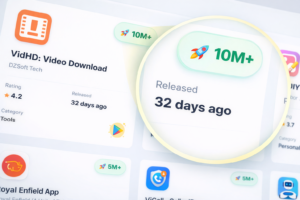
A tool I’ve found genuinely useful for this is Trending Apps by RankMyApps. It tracks recently launched mobile apps that are seeing a surge in installs, which gives you a real-time view of market demand — not speculation, not theory, but actual download momentum. I check it regularly to see what categories are heating up and whether there are gaps I could fill with a better or more focused product.
This kind of signal is incredibly valuable because it tells you what real users are already spending their time on.
Competitor Gaps
Pick 5–10 apps or SaaS tools in a space you care about. Use them. Really use them. Note what they do well and where they fall short. Some of the most successful indie products were born from someone thinking, “I can build a simpler version of this for a specific audience.”
How to Evaluate and Score Your Ideas
Having a long list of ideas feels productive, but it’s not — unless you have a way to separate the promising ones from the noise. Here’s a lightweight scoring framework I use:
The Five-Filter Test
For each idea, ask yourself:
- Problem clarity: Can I describe the problem in one sentence? If I can’t, the idea is too vague to build.
- Audience specificity: Who exactly has this problem? “Everyone” is not an answer. “Freelance designers who manage their own invoices” is.
- Existing solutions: What do people use today? If the answer is “nothing,” that could mean there’s no demand — or it could mean there’s a huge gap. Investigate.
- Willingness to pay: Would the target audience pay for this? Look for signals: are they already paying for adjacent tools? Are they cobbling together free workarounds? Both suggest money on the table.
- Your unfair advantage: Do you have any edge here? Domain expertise, technical skill in a relevant area, access to a specific community? You don’t need all of them, but having none is a red flag.
Score each filter from 1–5. Anything above 18 is worth a deeper look. Anything below 12, park it and move on.
Don’t Over-Analyze Early
A mistake I’ve made (more than once): spending weeks researching an idea before writing a single line of code or talking to a single potential user. The scoring framework is a filter, not a final verdict. Its job is to help you decide what’s worth spending your next weekend on — not to predict the future.
Watch Real Market Signals, Not Hype
There’s a difference between an idea that sounds good on Twitter and an idea that has actual market pull. Developers, especially technical ones, tend to over-index on novelty and under-index on demand. Here’s how to correct for that:
Look at What People Are Actually Using
Download trends, app store rankings, and install velocity are far more reliable than blog posts or VC tweets. When you see a new app climbing the charts in a specific niche, that’s not hype — that’s data.
Tools like Google Trends can show you whether interest in a topic is growing or fading. And if you want to go deeper into the mobile app space specifically, tracking trending apps and their install patterns can reveal demand before it becomes mainstream.
Follow the Money, Not the Buzz
If people are paying for something — even a clunky, ugly version of it — that’s the strongest signal you’ll find. Free tools with millions of users sound impressive, but they don’t tell you whether anyone values the solution enough to spend money. Look for:
- Paid apps with strong ratings
- SaaS tools with visible pricing pages
- Niche communities where people share paid tool recommendations
Talk to Real Humans
I know. Developers hate this part. But five 15-minute conversations with people in your target audience will teach you more than 50 hours of Googling. You don’t need a formal process. Just find people who have the problem, ask them how they currently deal with it, and listen.
From Idea to Validation: The Bridge Most People Skip
You’ve captured the idea. You’ve scored it. It looks promising. Now what?
This is where most developers do one of two things: they either start building immediately (too early) or they keep researching forever (too late, someone else shipped it). The sweet spot is lightweight validation.
Three Ways to Validate Before You Build
- Landing page test. Put up a single page that describes the product. Include an email signup. Drive a small amount of traffic (even $50 in ads). If nobody signs up, that’s useful information.
- Manual version first. Can you deliver the value of the app manually for 5–10 people? This sounds unsexy, but it’s the fastest way to learn whether people actually want what you’re offering. Stripe famously did this in their early days — the founders manually onboarded every early user.
- Pre-sell. If you have an audience (even a small one), describe what you plan to build and ask for pre-orders. Money talks. If people won’t pay $20 upfront for something they say they want, they probably won’t pay $20 later, either.
The goal of validation isn’t to prove your idea is perfect. It’s to reduce the risk of spending three months building something nobody wants.
Tools and Workflows That Help You Stay Organized
Here’s a quick rundown of tools that work well for different stages of idea tracking:
| Stage | Tool Suggestions | Why It Works |
|---|---|---|
| Quick Capture | Apple Notes, Google Keep, Telegram Saved Messages | Zero friction, always in your pocket |
| Structured Tracking | Notion, Airtable, a simple spreadsheet | Lets you add context, scores, and categories |
| Market Research | Trending Apps | Real demand signals, not guesswork |
| Validation | Carrd (landing pages), Stripe (payments), Tally (forms) | Quick, cheap, and tells you what matters |
| Building | Whatever stack you’re fastest in | Speed matters more than perfection at this stage |
You don’t need all of these. Pick one tool per stage and commit to it for a month. You can optimize later.
Common Mistakes Developers Make With App Ideas
I’ve made all of these. Sharing them so you don’t have to:
- Building before validating. The most expensive mistake. Three months of evenings and weekends gone because you skipped the “does anyone want this?” step.
- Chasing trends blindly. Just because AI chatbots are hot doesn’t mean your AI chatbot idea is viable. Trends are a starting point, not a conclusion.
- Ignoring boring problems. The best businesses often solve boring, unglamorous problems extremely well. Invoicing. Scheduling. Data entry. Don’t let your ego steer you away from profitable boredom.
- Waiting for the perfect idea. It doesn’t exist. Every successful product you admire started as a rough, imperfect, slightly embarrassing version of itself. Ship early, learn fast.
- Not tracking ideas at all. If you take one thing from this article: start writing your ideas down. Today. Even if the system is messy. Messy is infinitely better than nonexistent.
FAQ
How do I know if an app idea is worth pursuing?
Use a simple scoring framework: evaluate the clarity of the problem, how specific the audience is, what existing solutions look like, whether people would pay, and whether you have any unique advantage. If it scores well across most of these, it’s worth a deeper look and some lightweight validation.
Where do the best app ideas come from?
Most good application ideas come from real problems — either your own or ones you observe in communities, app store reviews, customer support threads, or conversations with potential users. The key is having a system to capture these observations when they happen.
How many ideas should I track before picking one to build?
There’s no magic number. Some developers keep a running list of 50+ ideas and review it monthly. Others work with a shorter list of 10–15. What matters more than quantity is the habit of regular review and honest evaluation. Don’t hoard ideas — prune them.
Should I worry if my app idea already exists?
Not necessarily. Competition is usually a sign of demand. The question isn’t “does this exist?” — it’s “can I build something meaningfully better, simpler, or more focused for a specific audience?” If yes, existing competition is actually a good thing.
How do I validate an app idea without spending months on it?
Start with the fastest, cheapest test possible: a landing page with an email signup, a manual version of the service, or a pre-sale to a small audience. The goal is to learn whether real people want this — not to build the finished product.
Written for developers and founders who’ve lost too many good ideas to bad systems. Start tracking today — future you will be grateful.