Let’s be honest for a second: staring at a blank IDE (Integrated Development Environment) is intimidating. You have the skills to build something amazing, but you are stuck on square one. You want to build the next big thing, or perhaps just a reliable passive income stream, but the marketplace feels incredibly crowded. With millions of apps on the App Store and Google Play, it’s easy to feel like everything has already been done.
But here is the truth—that is simply not the case. The mobile market is dynamic, shifting every single day with new technologies, changing user behaviors, and emerging trends. The secret isn’t necessarily to be a genius inventor; it’s to be an observant analyst.
If you are wondering how to find good mobile app ideas that actually work, you have come to the right place. We are going to move past the “just follow your passion” advice and dig into actionable, data-driven strategies that experienced developers use to identify gaps in the market. We will look at how to use tools, analyze competitors, and leverage data from services like RankMyApps to validate your concepts before you write a single line of code.
The Struggle of the Blank Canvas
Every developer has been there. You are ready to code, coffee in hand, but the idea just isn’t coming. Or worse, you have an idea, you build it for three months, release it, and… crickets. No downloads. No traction.
This usually happens because the idea was based on a “hunch” rather than market reality. Finding an idea is not about guessing; it is about research. You need to shift your mindset from “What do I want to build?” to “What does the market need right now?”
Moving Beyond Gut Feelings
Relying on your gut is risky business. While intuition plays a role, the app store is a brutal ecosystem where data wins. To truly understand how to find good mobile app ideas that actually work, you must embrace an analytical approach. You need to look at hard numbers, search volume, and trend trajectories.
Understanding What Makes an Idea “Good”
Before we hunt for ideas, we have to define what a “good” idea actually is. A good idea isn’t necessarily a unique one. In fact, being the first to market is often a disadvantage because you have to educate the user base from scratch.
Solving a Real Problem vs. Creating a Novelty
Novelty apps—like that old “drink a beer on your phone” simulator—might get a million downloads in a week, but they die just as fast. A sustainable app idea solves a recurring problem. It saves the user time, saves them money, or alleviates a specific frustration. If your app is a “vitamin” (nice to have), it’s harder to sell than a “painkiller” (essential).
The Importance of Market Viability
Does anyone actually want to pay for this? That is the million-dollar question. You might build the most sophisticated calculator for underwater basket weaving, but if the market size is three people, it is not a viable business. Market viability means there is a large enough group of people actively searching for a solution to the problem you are solving.
Why Execution Matters More Than Originality
Don’t be afraid of competition. If you see other apps doing what you want to do, that is actually a good sign—it proves there is a market. Your goal shouldn’t be to invent a new category, but to execute better within an existing one. Can you make it faster? Cleaner? Cheaper? More user-friendly? That is where the gold is.
Leveraging Market Data for Inspiration
This is where the pros separate themselves from the amateurs. You cannot operate in a vacuum. You need to see what is happening in the ecosystem right now.
Analyzing High-Growth Charts
Standard “Top Charts” on the App Store are often stagnant, dominated by giants like Facebook, TikTok, and YouTube. Looking at them won’t give you indie app ideas. You need to look at the “movers and shakers”—the apps that are climbing the ranks right now.
How to Find Good Mobile App Ideas That Actually Work
This brings us to the core of the methodology. To truly master how to find good mobile app ideas that actually work, you need a systematic approach to data gathering.
The most effective way to do this is to monitor new entrants that are gaining traction. Why? Because these apps have found a current market fit. They are riding a wave of recent interest.
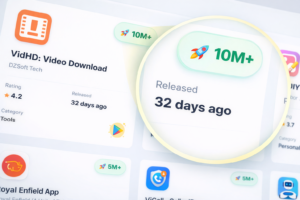
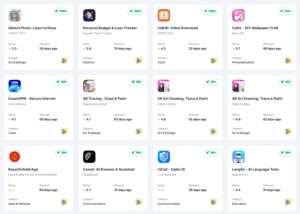
If you are looking for recently launched apps gaining rapid installs, you need tools that cut through the noise. This is where a service like RankMyApps becomes invaluable. Unlike general store analytics that show you what was popular last year, RankMyApps tracks recently launched mobile apps gaining installs shortly after launch, with data refreshed daily.
By observing these trending apps, you can reverse-engineer their success. Are a lot of AI photo editors popping up this week? Is there a sudden surge in “budgeting for couples” apps? These patterns are breadcrumbs leading you to profitable niches.
Using RankMyApps for Real-Time Validation
When you see a cluster of new apps exploding with installs in a specific category, it validates demand. You don’t have to guess if people want widget customization apps; the data proves they do.
By utilizing the insights from RankMyApps Trending Apps, you can identify these waves early. The platform specifically highlights applications that are fresh to the market but are already seeing significant user acquisition. This is your green light. It means the algorithm favors this type of content and users are actively downloading it.
Spotting Trends Before They Peak
The goal is to catch a trend on the way up, not on the way down. If you start building a “Flappy Bird” clone six months after the craze has died, you have missed the boat. By monitoring daily refreshed data on trending mobile apps, you can spot a trend on Day 3, build a prototype by Day 10, and launch while the wave is still rising.
The Review Mining Technique
One of my favorite “hacks” for generating ideas requires nothing more than a browser and some patience. It’s called Review Mining.
Reading 1-Star Reviews on Popular Apps
Go to the App Store, find a popular app in a category you like (e.g., Fitness), and sort the reviews by “Most Critical” or “1-Star.” Ignore the complaints about bugs or crashes. Look for feature requests and usability complaints.
- “I wish this app had a dark mode.”
- “Great app, but it’s too complicated for beginners.”
- “Why can’t I export my data to PDF?”
These aren’t just complaints; they are a roadmap. If you can build a simpler version of that app that includes the requested feature, you have an instant marketing angle: “The simple fitness tracker that actually exports to PDF.”
Identifying Feature Gaps in Competitor Apps
Big developers move slowly. They have corporate hierarchies and product roadmaps that are planned years in advance. As an indie developer, you are a speedboat. You can pivot quickly. If you see a feature gap that users are screaming for, you can build it before the big guys even schedule a meeting about it.
Turning User Complaints into Features
Take the negative sentiment and flip it. If users hate that an app requires a subscription for basic features, create a freemium model that offers those basics for free, monetizing through ads or advanced power-user features. You are essentially stealing their dissatisfied customers.
Drilling Down into Micro-Niches
If you try to build “The next Instagram,” you will fail. The general social media market is saturated. However, “Social networking for knitters” or “A dating app for dog owners” might just work.
Why Broad Categories Fail for Indie Developers
Broad categories require massive marketing budgets. You cannot out-spend Nike in the fitness category. But you can dominate the “Post-partum yoga for beginners” niche. The search volume is lower, but the conversion rate is significantly higher because the intent is so specific.
Finding Underserved Communities
Look for hobbies, professions, or groups that are passionate but ignored by Silicon Valley.
- Is there an app for heavy machinery operators?
- Is there a dedicated logbook for bonsai tree enthusiasts?
- What about a practice tool for bagpipe players?
These groups gather in forums and Reddit communities. Go there. Ask them what tools they wish they had on their phones.
B2B Mobile Opportunities
Business-to-Business (B2B) is often overlooked by mobile devs who focus on consumer games. However, businesses have money and are willing to pay for efficiency. A simple app that helps a plumber invoice clients on-site, or helps a warehouse manager track inventory, can command a high monthly subscription price.
The Remix Strategy
You don’t always need a new idea; sometimes you just need a new platform or context.
Adapting Desktop Software to Mobile
Look at popular desktop software or Chrome extensions. Are there any that haven’t made the jump to mobile yet? Or perhaps the mobile version is clunky and unusable? Porting a successful desktop workflow to a streamlined mobile interface is a fantastic way to find how to find good mobile app ideas that actually work.
Regional Arbitrage: Copying What Works Elsewhere
Sometimes an app is huge in Asia or Europe but hasn’t taken off in the US (or vice versa). Keep an eye on international charts. If a specific type of gameplay or utility is exploding in South Korea, there’s a good chance it might work in Western markets if adapted culturally.
Unbundling Complex Apps
Some apps try to do everything—Facebook is a marketplace, a video host, a dating app, and a social network. “Unbundling” means taking one small feature of a complex app and making a standalone app dedicated just to that. For example, if a banking app has a buried “bill split” feature, make a dedicated app just for splitting bills that is faster and easier to use.
Using SEO and Search Volume for Ideas
App Store Optimization (ASO) isn’t just for marketing; it’s for research.
Reverse Engineering App Store Search
Use the auto-complete feature in the App Store search bar. Type in a keyword like “Editor” and see what pops up.
- “Editor for Instagram”
- “Editor for TikTok”
- “Editor for PDF”
These suggestions appear because people are searching for them. This is direct insight into user intent.
Analyzing Keyword Difficulty and Opportunity
Tools like mobile actionable data platforms or even standard SEO tools can show you keyword volume. You are looking for high volume (lots of searches) and low difficulty (few high-quality apps). If you find a keyword with 50,000 searches a month and the top result is a 3-star app last updated in 2019, you have struck oil.
Testing Your Hypothesis Cheaply
Once you have a “good” idea, don’t mortgage your house to build it. Test it.
The Landing Page Test
Set up a simple one-page website describing your app features. Run $50 worth of ads to it. Collect emails. If nobody clicks the ad, or nobody gives you their email, you just saved yourself six months of development time. It turns out the idea wasn’t as good as you thought.
Rapid Prototyping and MVP Definitions
Build a Minimum Viable Product (MVP). This is the version of the app with only the core feature. No settings, no profile pictures, no dark mode—just the main function. Release it and see if the recently launched apps gaining rapid installs trends carry you.
Common Pitfalls in App Ideation
Even with the best strategies, developers stumble.
Ignoring Platform Guidelines
Always read the Apple App Store Review Guidelines and Google Play Console Policy Center. There is no point in building an idea that is technically forbidden, like an app that downloads YouTube videos (which violates Google’s terms).
Overcomplicating the First Version
Feature creep is the enemy. You might think your app needs a social feed, a leaderboard, and AI integration. It doesn’t. It needs to solve one problem perfectly. You can add the bells and whistles later.
Final Thoughts on Your App Journey
Finding the right idea is a mix of art and science. It requires you to be curious, analytical, and a little bit brave. By observing the market, respecting the data, and using resources like RankMyApps to see new apps exploding with installs, you drastically reduce your risk of failure.
Taking the Leap from Idea to Code
Remember, an idea is only a multiplier of execution. A mediocre idea with brilliant execution is worth a lot more than a brilliant idea with poor execution. Don’t get stuck in “analysis paralysis.” Pick a validated idea, build the MVP, and get it into the hands of users. The market will tell you what to do next.
Frequently Asked Questions
Is it better to build iOS or Android apps first? This depends on your target audience and monetization strategy. Generally, iOS users spend more money on apps and in-app purchases, making it ideal for paid apps. Android has a larger global market share, which is better for ad-supported models. Many developers start with iOS for validation and then expand to Android.
Do I need to be a programmer to build a mobile app? Not necessarily. The rise of No-Code and Low-Code platforms allows non-technical founders to build functional apps. However, for complex, custom functionality, you will eventually need to learn coding or hire a developer. Understanding the logic of how apps work is beneficial regardless of your coding ability.
How much money does it cost to launch an app? The cost varies wildly. A simple MVP built by yourself costs only your time and the developer account fees ($99/year for Apple, $25 one-time for Google). Hiring an agency can cost anywhere from $10,000 to $500,000. It is highly recommended to start small and bootstrap your initial version.
What if someone steals my app idea? Ideas are cheap; execution is everything. It is very rare for someone to “steal” an idea and execute it exactly like you would. By the time they copy you, you should already be moving to the next phase of your roadmap. Don’t let paranoia stop you from validating your idea with real users.
How do I know if my app idea is unique enough? Uniqueness is overrated. Facebook wasn’t the first social network; Google wasn’t the first search engine. Your app doesn’t need to be 100% unique; it needs to be better, faster, or more specific than the competition. Focus on “better,” not just “different.”
How long does it take to build a successful app? There is no set timeline. Some apps take off in a week; others take two years of constant iteration. A realistic timeline for an indie developer is 1-3 months to build an MVP, followed by ongoing updates based on user feedback. Success is usually a marathon, not a sprint.